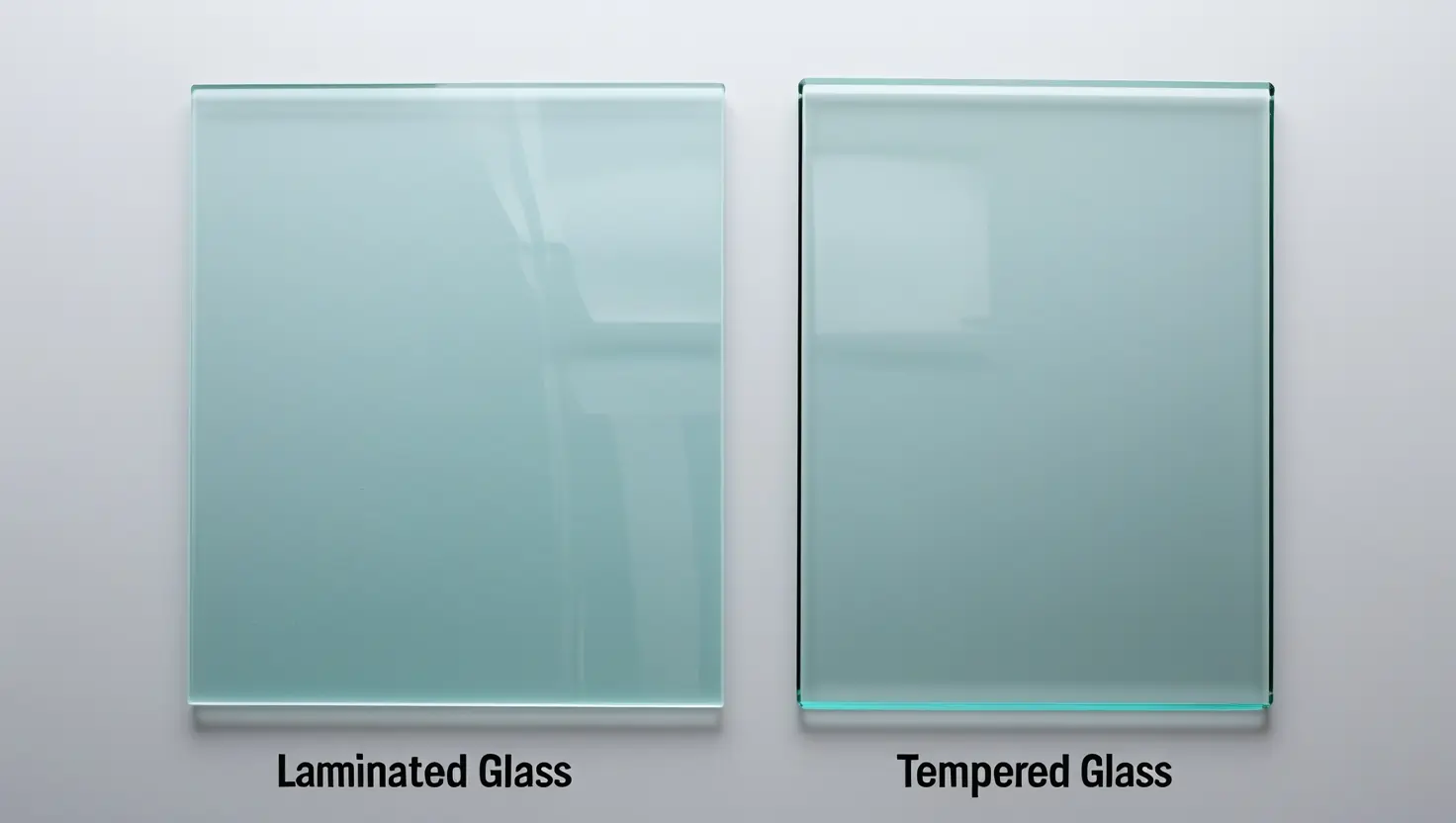
When safety, security, and durability matter most, tempered and laminated glass are the trusted solutions. Whether you’re installing windows in a home, storefront, office, or high-traffic area, these specialty glass options offer enhanced impact resistance, shatter protection, and code compliance—without sacrificing style or visibility.
What Is Tempered Glass?
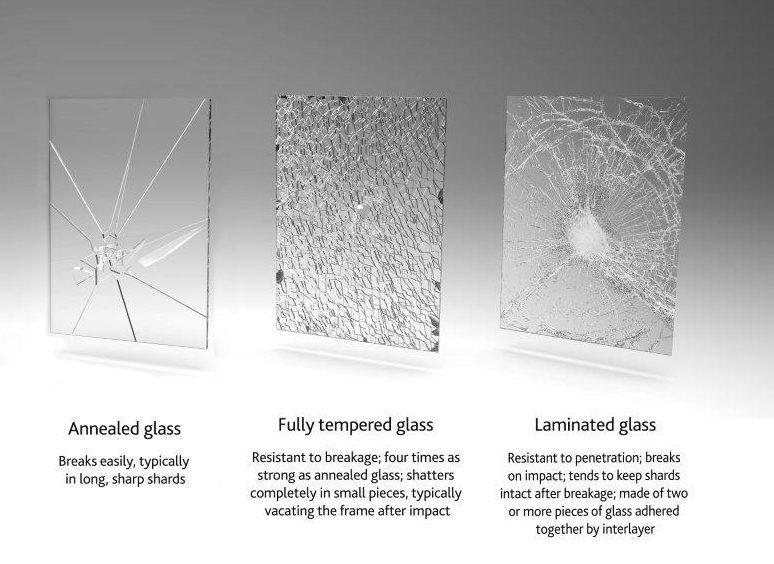
Tempered glass is heat-treated to be 4–5 times stronger than regular glass. If it breaks, it shatters into small, blunt pieces that reduce the risk of serious injury. It’s often required by building codes for doors, bathrooms, and areas near the floor.
✅ Safety glass ✅ Heat- and impact-resistant ✅ Ideal for sliding doors, shower enclosures, and large windows
1. What is Laminated Glass?
Laminated glass is created from two pieces of tempered or regular glass, between which is a layer of clear plastic film. The glass is first treated to eliminate the existence of any air bubbles/pockets and is then heated for the first round of melting.
After this initial process, the glass is heated again but this time under pressure to finalize the glass product. Stronger laminated glass can be made by adding more layers.
Laminated glass can be very slightly stretched (not in a rubber band way) so that it can be placed in its position properly.
2. What is the Purpose of Laminated Glass?
Laminated glass was originally designed for use in vehicle windshields to reduce the frequency of injuries in victims of car accidents. When one side of the glass experiences an impact, only that side will shatter, not the entire glass. The pieces also stay together after one or two impacts (depending on their severity) so the risk of injury is minimal.
Laminated glass also provides soundproofing of high-frequency sounds, and on top of that, it also blocks 97% of ultraviolet radiation.
Fun Fact: Minor impact damage in laminated glass can be repaired by using a special clear adhesive resin.
Tempered Glass
Breakage pattern on tempered glass
1. What is Tempered Glass?
Tempered glass is a piece of traditional (ordinary/annealed) glass that is heated and cooled to give it its safety properties. This heating/cooling process is called ‘tempering’ which is where the name ‘tempered’ glass comes from.
Tempering involves heating and cooling the glass rapidly which causes the glass to develop its safety properties in an interesting way. In essence, quickly cooling hot glass causes the outside surface of the glass to harden faster than it does in the center. The result of this process leaves the center of the glass ‘in tension’ which makes it much stronger and more durable than non-tempered glass.